 Tips
Young Rider's Guide to Getting Insured in Ireland
BótharMoto Editorial · 6 November 2026 · 8 min read
So you've passed your test, you've got the gear, and you've spent three weeks staring at bike listings on your phone instead of ticking a single thing off your to-do list. You're ready. All that stands between you and the open road is one pesky formality: insurance.
If you're a young rider in Ireland, getting insured is less a "formality" and more a side quest that someone designed after a long weekend of ruthless spreadsheeting. Grab a tea, because this one's worth knowing about before you start ringing around.
Why Insurers Look at Young Riders Like You've Already Crashed
Here's the uncomfortable truth: to an insurer, you're not a person. You're a risk profile. And a young rider on a motorcycle is a risk profile with a flashing red light on top.
Insurers price on statistics, and the statistics say that younger, less experienced riders are involved in more claims. Motorcycles also offer less protection than a car (physics is rude like that), so injury claims can be hefty. Add in the fact that you've probably got no claims history, no no-claims bonus and no track record, and the insurer has nothing to reassure them.
To you, you're a careful, sensible rider who always checks mirrors and has no intention of ever popping a wheelie. To them, you're a blank page with a date of birth. And blank pages are expensive.
The Catch-22 Nobody Warns You About
Here's the cruel loop at the heart of it all. To get cheaper insurance, you need experience and a clean record. To get experience and a clean record, you need to be on the road. To be on the road, you need insurance.
It's the motorcycle equivalent of those job ads asking for five years of experience for an entry-level role.
Every year you ride claim-free helps. Every year you build up a no-claims bonus helps. But that first year? That's the toll booth, and the toll is steep. Many young riders find the quote is a good chunk of the value of the bike itself, which makes you question whether you should've just bought a very nice bicycle.
So Which Bikes Make Insurers Clutch Their Pearls?
Not all bikes are created equal in the eyes of an underwriter. A few things push a quote upward:
Power and performance. The more horsepower, the more eyebrows go up. A sporty, high-performance machine in the hands of a new rider is the stuff of insurance nightmares.
Value. The more a bike costs, the more it costs to replace. Simple maths.
Repair costs. Fairings, electronics and fancy parts are pricey to fix when you drop it, which you will almost certainly do in your first year of bike ownership.
The Fairing Factor
Yes, it is generally harder and more expensive to insure a fully faired motorcycle, especially one in the sportbike or supersport category, than a naked bike, cruiser or standard model with little to no fairing. And now throw an R in the name of the bike and insurers will throw some extra digits into that quote. Why?
Higher risk classifications. Insurers often lump fully faired sportbikes into high-risk performance or "supersport" tiers, because the claims data shows higher claim frequencies and accident rates for these models.
Costly repairs. Full fairings (plastic, fibreglass or carbon fibre) and hidden electronics mean even a minor low-side or a car park tip-over can cause expensive cosmetic and structural damage. That drives up payouts or tips the bike into write-off territory.
Perceived speed and "DNA". Insurers' models link the aerodynamic styling and track-focused performance of faired bikes with higher speeds and more aggressive riding, which inflates the baseline premium before you've even turned a wheel.
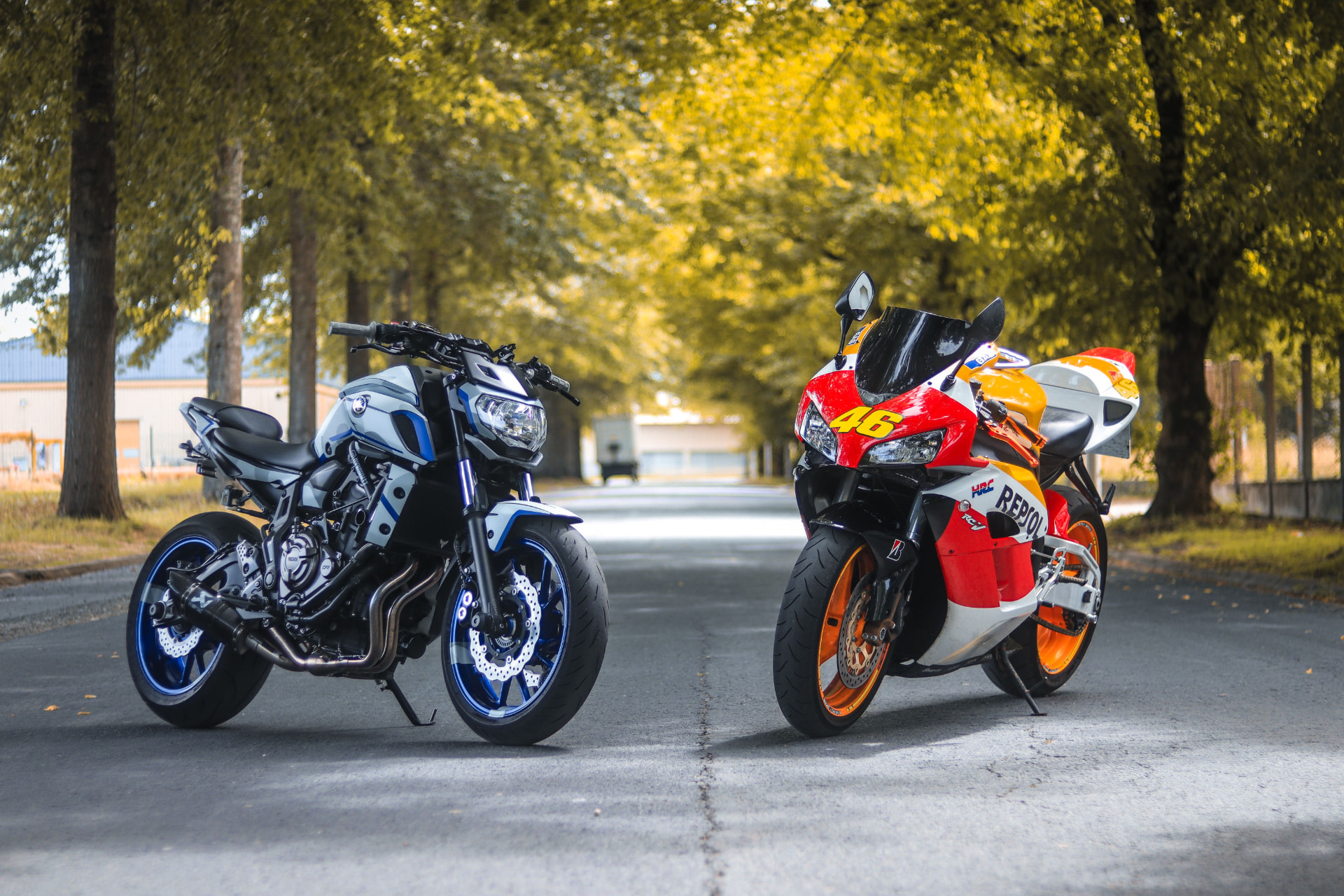
In other words, that gorgeous Repsol-replica CBR600 look comes with a price tag your insurer will happily add to.
And the Big One in Ireland: Theft
This is where things get genuinely annoying, because it's not even about how you ride. It's about what other people want to steal.
Some bikes are simply hot property for thieves here, and insurers know it. If you're eyeing up any of the following, brace yourself for a higher premium:
KTM Duke 390. Light, punchy, brilliant fun, and unfortunately very popular with people who shouldn't be riding it away from your driveway.
Suzuki DRZ 400. A legendary do-it-all machine that thieves seem to appreciate as much as owners do.
Yamaha MT-07. A hugely popular, much-loved naked bike. Popular with riders. Popular with thieves. Popular with insurers' calculators, sadly.
Yamaha Tracer 700. The sensible sport-tourer that turns out to be not-so-sensible for your premium.
The takeaway? A bike being a good, honest, well-loved machine is exactly what makes it a target. Which means a decent lock, a ground anchor, a disc lock and, if you can swing it, a tracker aren't just good habits. They can genuinely help your insurance conversation too. Insurers love hearing "yes, it's locked up in a garage with a chain through the wheel." It's their love language.
If your wallet is already wincing, consider a smaller, less glamorous, less nickable bike for your first year or two. It may not be the one on your bedroom wall poster, but it'll be on the road, and you'll be building that all-important history. Think of it as the training montage before the big fight.
Little Things That Can Shave Down the Quote
It's not all doom. A few tricks are worth trying:
Shop around properly. Quotes can vary wildly between insurers for the exact same rider and bike. Don't stop at one or two.
Consider a specialist broker. Brokers who deal in motorcycles know which insurers are friendlier to younger riders.
Be honest on the form. Fibbing about where it's parked or who's riding it can void your cover when you most need it. Not worth it.
Secure storage helps. A locked garage beats a street outside the flat every time.
Mention every extra security measure. Any auxiliary security you've got on the bike is worth flagging, and a great one is an alarmed disc lock. If your bike has an immobiliser (factory fitted or aftermarket) or a tracker, don't forget to mention it, or include it on the online form if that's the route you take. Insurers can't give you credit for what they don't know about.
Phone in, don't do it online. A real person can take in the full picture of your bike, your storage and your security setup, which a tick-box form often can't.
Build your history. Even a year of claim-free riding opens doors.
Think about the bike. Lower power, less fairing and lower theft appeal means a gentler quote.
The Final Lap
Getting insured as a young rider in Ireland is a rite of passage. It's expensive and frustrating, and anyone who tells you otherwise is either rich or over the age of 30.
But it's not impossible. Pick a bike that doesn't make underwriters weep, lock it up like it's the crown jewels, shop around, build that claim-free history, and keep your licence clean.
The open road is still out there. It just comes with paperwork.
Ride safe, ride smart, and for the sake of all our premiums, lock your bike.