 Tips
Tips and the process for getting your motorcycle theory test and IBT completed
BótharMoto Editorial · 22 October 2026 · 7 min read
Before you start fantasising about getting your hands on your very own crotch rocket, it's important to get the essentials out of the way. The first step is booking your motorcycle theory test. A quick Google search for the motorcycle theory test will bring up a number of different websites, such as IrelandTheory.com. I'd avoid these, as some can charge up to €70 for their services, while others may not be legitimate. Instead, book your test directly through the RSA website, where it currently costs €45 per test. Most counties only have one theory test centre, so getting a convenient date can sometimes be a challenge. If you're struggling to find a slot, it's worth checking the Dublin, Cork and Donegal test centres, as they have multiple locations and can sometimes offer more availability.
When it comes to studying for the theory test, you have a few different options. You can pick up the Driver Theory Test Q&A book for around €21 from Easons, or you can visit the Prometric DTT store for the official RSA theory test study materials. Personally, I found the DTT Car/Bike app very useful for getting familiar with the questions and getting a feel for what to expect on the day. That said, I'd still recommend getting the theory test book and using that as your main study guide. The app doesn't cover every possible question, whereas the book gives you much more comprehensive coverage. It's better to spend a bit of extra time going through the book than to get caught out by a question you've never seen before when you're sitting in the test centre.
If you have booked your test but something comes up and you can't make your selected date, make sure you reschedule it at least 7 days before the test. If you don't, you could end up paying a 50% administration fee. On the day of the test, make sure you arrive at the test centre at least 10 minutes before your allocated time. You'll be brought from the waiting room before the test and should be seated and ready to go at your allocated start time.
The test itself lasts 45 minutes and you'll need to get at least 35 out of the 40 questions correct to pass. The result is marked automatically, so you'll know how you've done straight away. If you've passed, you'll receive your theory test pass certificate at the test centre.
Once you have your theory test certificate, you can move on to the next step, which is applying for your learner permit through the NDLS website. Before you start the application, make sure you have your proof of residency documents ready and that they are dated within the last 6 months. The learner permit application costs €45.00 and, in most cases, your new permit should arrive in the post within 5 business days.
Now that you have the theory test out of the way and your learner permit on the way, it's time to start thinking about your IBT, or Initial Basic Training. This is where things start getting a bit more interesting because you finally get to spend some proper time on a motorcycle. If you're going for a smaller motorbike in Category A1 or AM, the IBT course will be around 16 hours long and is made up of 5 different modules. If you're going for a larger motorcycle in Category A or A2, the course will be around 18 hours long and will consist of 3 modules. Once you have completed your IBT course, or an individual module, your instructor will give you an IBT Certificate of Satisfactory Completion.
For the A1 and AM courses, the five modules are designed to take you from getting familiar with the motorcycle and learning the basics, all the way through to being able to ride safely and confidently on the road. Module 1 is all about getting comfortable with the bike itself. You'll learn about your protective equipment, the different controls, basic safety checks, how to start and stop the motorcycle and how to maintain your balance. It's essentially about getting you and the bike acquainted before things start moving a bit quicker.
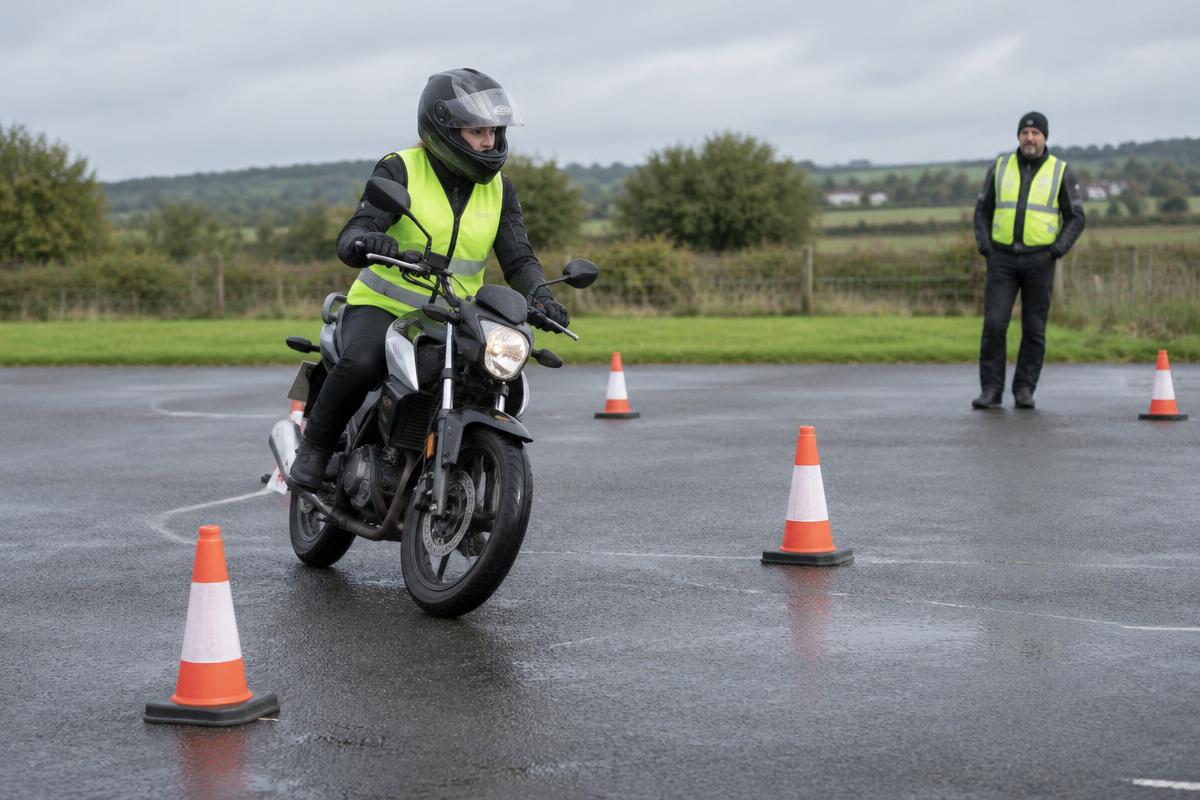
Module 2 is where you start building up your basic riding skills. This includes things like braking, changing gears, slow speed control, U turns and slalom exercises. You'll also start working on observation and road positioning, which are both hugely important once you get out onto public roads. The idea is to get you comfortable controlling the motorcycle and making it do what you want it to do.
Module 3 moves more towards road safety and awareness. You'll cover traffic laws, managing your speed, road positioning and how to deal with different hazards you might come across while riding. You'll also learn about things like emergency vehicles and how changing weather conditions can affect your riding. Motorcycles can be great fun, but they also require you to be switched on, so this part is all about making sure you understand what's happening around you.
Module 4 is where things get even more practical, as you head out onto the road and start putting everything you've learned into practice. You'll work on things like junctions, roundabouts and pedestrian crossings while learning how to anticipate hazards and ride defensively. This is the stage where all those skills you've been practising in a controlled environment start to make a lot more sense when you're dealing with actual traffic.
Finally, Module 5 builds on everything you've already learned and introduces some more advanced practical riding. This includes emergency stops, overtaking and higher speed riding, as well as carrying passengers and dealing with different road and riding conditions. By this point, you should have built up a much better understanding of the motorcycle and how to handle it safely in a variety of situations.
Once you've completed all 5 modules to a satisfactory standard, your instructor will give you your IBT certificate. This certificate is valid for two years from the date it was issued, so you have a decent amount of time to get some experience under your belt before moving on to the full riding test.
At this stage, you've got the important boxes ticked. You've passed your theory test, you have your learner permit and you've completed your IBT. All that's left now is making sure both you and the bike are officially road legal before heading out on your own.
Once you've got your learner vest on, you can ride on all public roads apart from motorways. Your learner permit is valid for 2 years, after which you'll need to apply for a new one if you haven't completed your full test. Once you start getting comfortable on the bike and feel ready to take things to the next level, it's worth looking into booking your full riding test. Waiting times for an allocation can be long, so it's worth getting your application in sooner rather than later. After all, the sooner you pass, the sooner you can get rid of that L vest, which isn't just a matter of aesthetics. Getting your full licence can also help when it comes to your insurance premium.
And that's pretty much the journey from thinking about getting on a motorcycle to actually being legally ready to ride one on the road. There's a bit of admin involved at the start, but once you've got the theory test, learner permit and IBT sorted, you're finally at the fun part. Take your time, get plenty of practice in and don't rush the process. The more comfortable you become on the bike, the more enjoyable riding will be, and before you know it, you'll hopefully be looking at that full licence and wondering why you didn't get started sooner.