 Roads & Law
Here's how to stay roadworthy in Ireland
BótharMoto Editorial · 29 October 2026 · 7 min read
One of the perks of riding in Ireland instead of driving is that your bike doesn't need an NCT. No test centre queue, no stranger prodding your brakes, no pass or fail sticker. Here's the slightly less fun fact: nobody being paid to check means the job lands on you. The good news is there's a handy five-minute routine called POWDER that makes it painless.
No test, but you're not off the hook
Ireland has the NCT for cars and the CVRT for commercial vehicles, and motorcycles don't fall under either. Brussels' own summary of the Irish system says the same: bikes and light trailers aren't subject to periodic roadworthiness testing. Cue the celebratory revs.
Don't toss the spanners just yet, though. Under the Road Traffic Acts, any vehicle on a public road has to be roadworthy, test or no test. That means there's no annual pass to wave about, and if a Garda decides your bike looks unfit for the road, "but I don't need an NCT" won't win the argument.
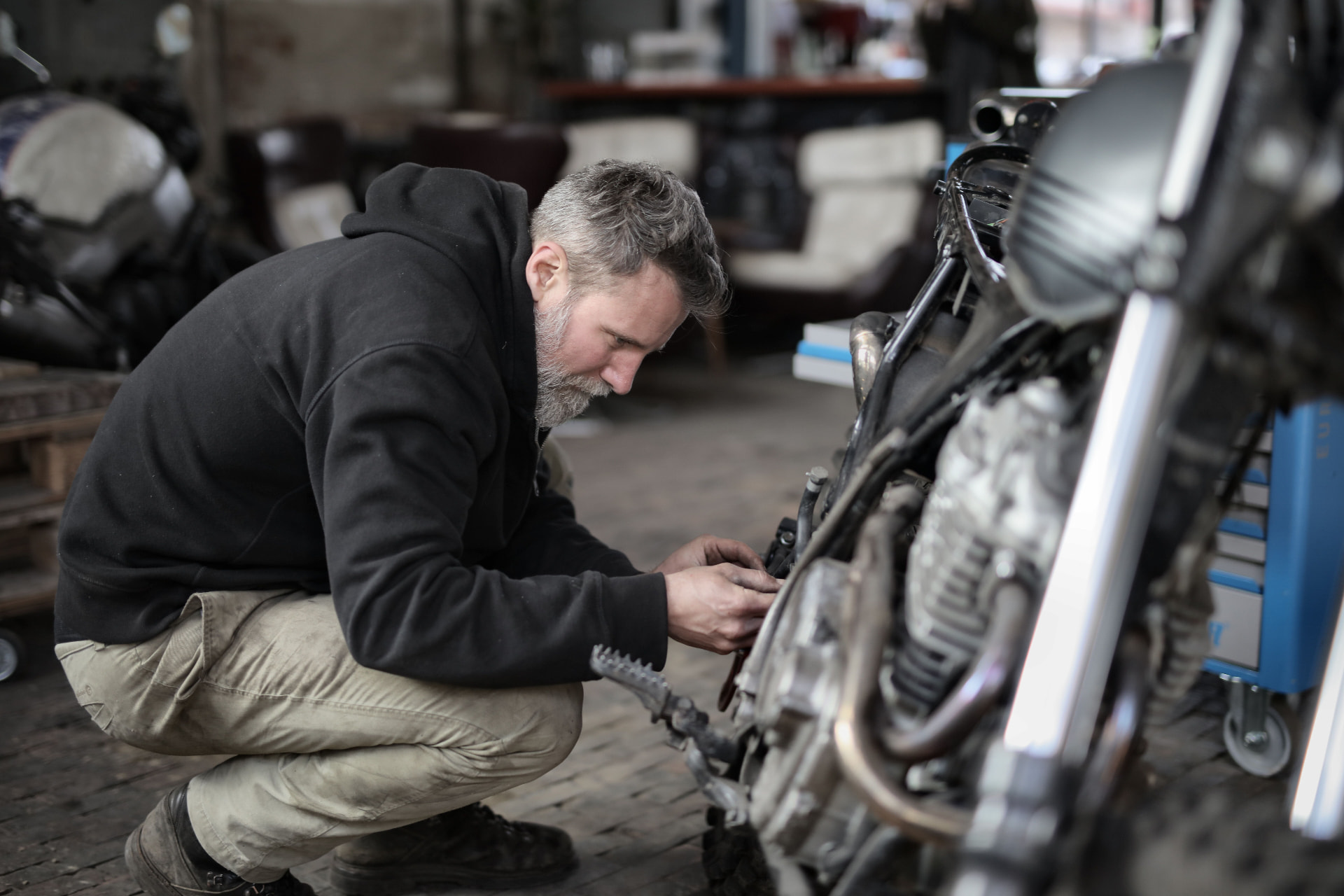
In other words, you're the tester, the mechanic and the person who has to explain the dodgy brake light. Which is exactly where POWDER earns its keep.
POWDER: your five-minute pre-ride check
POWDER is a simple checklist that works on everything from a learner 125 to a full-fat tourer. Run through it before a ride, and certainly before the first run after a winter in the shed.
P — Petrol: fuel level, leaks, a secure fuel cap.
O — Oil: engine oil level, chain lube, brake and clutch fluid.
W — Water: coolant level and hoses on liquid-cooled bikes.
D — Damage: frame, forks, bars, mirrors, chain, loose bolts.
E — Electrics: lights, indicators, brake light, horn, battery.
R — Rubber: tyre pressure, tread, cracks, age, brake pads.
P is for Petrol
Start with the obvious: is there enough in the tank to get home? Irish petrol stations can be thin on the ground once you're out in the country, and pushing a bike up a boreen is nobody's idea of a scenic route. While you're there, check the fuel cap seals properly and glance underneath for drips or a petrol smell around the lines and tank. A leak is a fire risk, not a quirk.
O is for Oil
Check the engine oil on a level surface, using the sight glass or dipstick as your bike's handbook shows. Then look beyond the engine: brake and clutch fluid reservoirs should sit between their min and max marks, and a dark, dried-out chain is begging for lube. Our famously damp weather washes chain lube off quickly, so it's worth doing little and often rather than once a season.
W is for Water
If your bike is liquid-cooled, check the coolant level in the overflow bottle when the engine is cold, and look over the hoses for cracks, bulges or damp patches. Air-cooled? Lucky you, give yourself a high five and move on.
D is for Damage
Give the whole bike a once-over like you're a suspicious buyer. Look for fork oil weeping down the legs, bent bars or levers, cracked mirrors and loose bolts, then check the chain tension and the state of the sprockets. Pay extra attention after a tip-over or a close encounter with one of our legendary potholes, because small knocks hide bigger problems.
If you're buying a used bike here, this is also your safety net. There's no test report to lean on, so your own inspection (and a proper test ride) is the only check the bike will get. Ask for the service history too, because a seller can't wave a test certificate at you, since there isn't one.
E is for Electrics
Switch on the ignition and run through everything: headlight (dipped and main beam), tail light, brake light on both the lever and the pedal, indicators and horn. Then check the dash for warning lights and make sure the battery holds a decent charge, especially if the bike has been sitting. A brake light that doesn't work is the sort of thing that gets you rear-ended by someone checking their phone, so it's worth the thirty seconds.
R is for Rubber
Tyres are your only contact with the tarmac, and that goes for the daily commuter and the full-send squid missile alike. The legal minimum tread depth for a motorcycle in Ireland is 1mm, and the RSA says that has to be across the whole treaded area, not just a healthy strip down the middle. The RSA also advises replacing tyres before they reach that limit, since worn tread clears water badly, and Ireland has plenty of water to clear.
Check pressures against your handbook, look for cracks, cuts or bulges, and remember age matters as well as tread. A tyre that has sat for years can harden and lose grip even if the tread looks fine. While you're down there, peek at your brake pads too. If you can barely see any pad material, it's shopping time.
Doing your motorcycle test? Expect a once-over
There is one occasion when someone official does look over your bike: the practical driving test. Before the test can go ahead, the tester checks that your bike meets the requirements for your test category, which are listed in your booking confirmation. You'll also sign a statement confirming that the bike is roadworthy and properly insured, so "it's probably fine" won't cut it.
If the tester isn't happy with the bike, the test doesn't go ahead, and if it turns out to be unroadworthy mid-test, they can cut it short. Finding out your brake light is dead at that moment is a miserable way to spend a test slot.
The fix is easy and free: run POWDER the day before, not in the car park five minutes beforehand. Check your lights, indicators, brake light and horn, then your tyres, brakes and chain, and leave yourself time to sort anything that turns up.
The Irish extras
POWDER is universal, but Irish riding adds a few bonus rounds:
Rain, rain and more rain. Wet weather strips chain lube and tests your tyres and brakes harder, so check them more often than a sunnier country would.
Potholes and rough surfaces. Look over wheels, forks and suspension after any hard hit, even if the bike seems fine.
Winter grit and salt. After a gritted road, give the bike a rinse and a quick lube so corrosion doesn't get a head start.
Winter storage. If your bike hibernates, run POWDER again before the first spring ride. Stale fuel, a flat battery and sulking tyres have all been plotting while you were away.