 Racing
Goodbye to the Island as MotoGP Heads for the City Streets
BótharMoto Editorial · 30 October 2026 · 8 min read
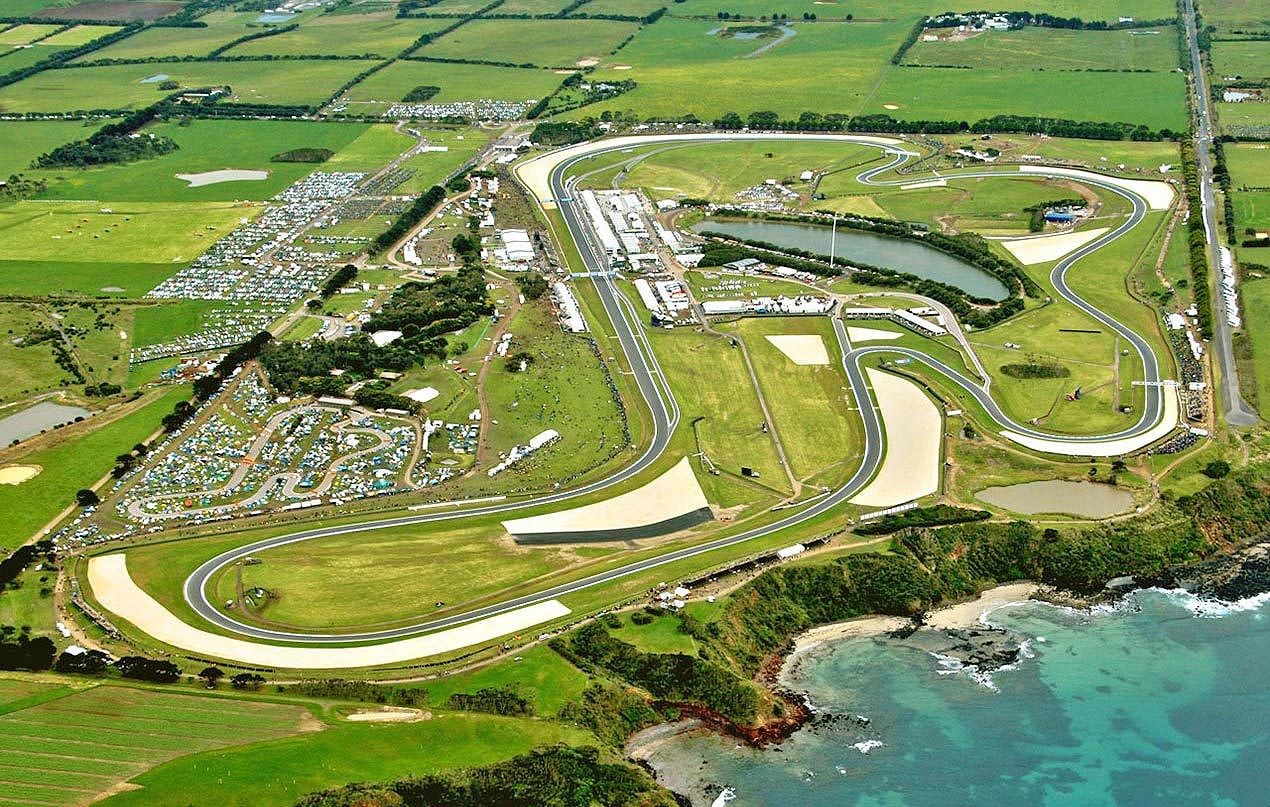
For three decades, the Australian Grand Prix has meant one place. It's a windswept stretch of Victorian coastline with the Tasman Sea just beyond the fence. MotoGP has raced at Phillip Island every year since 1997, and the circuit also hosted the very first Australian rounds in 1989 and 1990. The race then spent six years at Eastern Creek before returning to the Island. This year's edition ended the way a lot of Island weekends go, with the weather deciding everything. From 2027, MotoGP does something it has never done before. It leaves the coast for a city centre.
The Island we're losing
Phillip Island was a rider's circuit. It was fast, undulating and flowing, with big commitment corners that rewarded bravery and punished hesitation. Riders loved it, fans loved it, and it produced some of the best racing on the calendar. Add the coastal setting and you get a venue that earned its reputation honestly. Even critics of the move concede it was one of the most popular circuits on the calendar, so replacing it was always going to cause a stir.
The final act was cruelly fitting. Heavy rain and low visibility grounded the medical helicopter, which would take 45 minutes to reach the circuit from mainland Melbourne in an emergency. The weekend had already lost its Moto2 and Moto3 races, and in the end the MotoGP race was cancelled too, in front of a sold-out crowd. The riders weren't the problem. Most would have raced, but they accepted the call because it was about medical care, not track conditions.
Hallowed ground for Australian riders
The story starts in 1989. The world championship first came to Phillip Island in April 1989, and Wayne Gardner became the first rider to win the Australian Grand Prix there. He beat Yamaha's Wayne Rainey to the flag by just 0.35 seconds. Gardner did it again in 1990, in spite of a broken wrist. The race then moved to Eastern Creek in Sydney for six years before coming home to the Island in 1997.
Since then, the circuit has become something close to sacred for Australian fans. The premier class has raced there 29 times, and Australian riders have won nine of those races. Gardner took two. Mick Doohan won in 1998, during his fifth consecutive world championship season. Then came Casey Stoner. He claimed six consecutive MotoGP wins at the track from 2007 to 2012, securing his second world title at the venue in 2011. Stoner was the last Australian to win the premier-class race there, and the Island's final MotoGP race never got the chance to change that. Three of the greatest riders the country has produced won at this circuit, and it's no wonder the home crowds turned the place into a pilgrimage.
Adelaide's long game
Adelaide has history here. It hosted the Australian Formula 1 Grand Prix through 1995, then lost the race to Melbourne's Albert Park. Victoria secured the deal in 1993, and Albert Park staged its first race in 1996. Adelaide has spent the years since as a city that used to have a big international motorsport event, and the timing of this deal suggests it never stopped wanting one back.
The decision came down to a handful of factors. MotoGP wanted a bigger, more commercially attractive event, and a city-centre festival sells more tickets and hospitality than a remote coastal circuit ever could. Victoria then closed the door on the alternative. It refused MotoGP's request to move the race to Albert Park and offered extra funding to keep it at the Island instead, which left the existing deal with nowhere to go. Adelaide stepped in with a stronger visitor-economy pitch and something no other venue could match. It will host the first MotoGP race ever staged in a city centre, and the championship hasn't raced on a true road circuit since the 1981 Finnish 500cc Grand Prix.
Phillip Island's limitations also counted against it. The circuit is a long way from Melbourne's main visitor infrastructure, and local hotels can only hold so many fans. Exposed coastal weather creates scheduling headaches, the venue needs investment to keep pace with modern expectations, and crowd sizes are capped partly by how hard the place is to reach. This year's cancellation put all of that on display. Race control needs a flight window of around 60 minutes at both the Island and Melbourne before a race can start. The race director noted that at other tracks a road ambulance can get a rider to hospital, but at Phillip Island that isn't feasible because of the travel time.
Finally, Adelaide offered a willing government and a workable deal. The six-year agreement runs through 2032, which gives MotoGP time to build a following and judge the commercial results. The city also already hosts the Supercars Grand Final on the same street circuit, so it knows how to build and run a temporary venue. Political commitment, a clear commercial pitch and a distinctive concept arrived just as the Victorian talks were collapsing.
The Liberty Media effect
None of this happened in a vacuum. Liberty Media's takeover of MotoGP from Dorna has changed the tone of the championship, and Adelaide is just another example of it.
Liberty's playbook in Formula 1 is well known. Since it took over in 2016, F1 has moved steadily toward glamorous city locations. By most counts, the grid has gone from around four street circuits to roughly eight, depending on how you class the semi-permanent ones. Liberty has openly talked up eye-catching events in destination cities. Miami, Las Vegas, Jeddah and Madrid are all part of that shift, and not every fan has welcomed it. Many have grown tired of new street races and would rather see classics return.
So are we watching the same trend arrive in MotoGP? It's too early to say, but it's hard to ignore the parallel. A championship under new ownership has swapped a beloved purist circuit for a city-centre spectacle, backed by a government eager to pay for it. If Adelaide delivers on crowds, atmosphere and revenue, other cities will notice. The hope is that any future street races are added to the calendar rather than replacing iconic venues such as Mugello, Assen or Phillip Island itself. That balance will be the real test of whether MotoGP can grow without losing its soul.
The elephant in the paddock
A bike street race is a very different proposition from a car one. Drivers are protected by a roll cage, which means street circuits can get away with less run-off and lean on tyre barriers and Tecpro barriers to absorb impacts. Riders have no such protection. They leave the bike at speed and slide or tumble along the track, so a collision with a wall or barrier that a driver would walk away from can be far more severe for a rider. Uneven surfaces, street furniture, tree lines and tight corners leave little margin for error, which is why street racing demands far more space and safety planning for two wheels than it does for four.
MotoGP knows this, which is why the Adelaide layout has gone through a major redesign. The current plan is a 4.13km, 15-turn circuit with a Brabham Straight where riders will top 340km/h, and more than 20 iterations of the design were produced. The original February concept was longer, with 18 corners, and it drew plenty of safety criticism, which led to changes.
The revised design adds temporary gravel run-off areas around the circuit and draws on specialist advice from MotoGP safety advisor Loris Capirossi and five-time Supercars champion Mark Skaife. A realigned section of track between the Senna Chicane and Bartels Road is a key change, and organisers say the safety work also let them move the temporary grandstand and pit building to a better spot beside the heritage grandstand. MotoGP and Supercars will run on separate weekends, with the barriers modified between events. There is also a reported backup plan, since The Bend Motorsport Park, an hour outside Adelaide, is said to be a fallback if the street circuit can't meet the required safety standards. The race itself is listed as the penultimate round on 14 November 2027, subject to homologation.
The riders' early reaction has been surprisingly positive. Jack Miller and Alex Marquez both indicated the plan looks like a normal circuit once the run-off is included. Marc Marquez said everyone will enjoy the track, though seeing houses beside the circuit is strange for the riders. Early approval isn't the same as a successful first race, but it's a better start than many expected.
There are non-safety hurdles too. Many locals oppose the removal of trees in the Park Lands that the circuit would need. Organisers say vegetation impacts will be managed and offset, but this will keep generating headlines before the first bike turns a wheel.
So, good move or gamble?
It's a gamble, and an interesting one. Phillip Island offered the kind of racing the sport is proudest of, and walking away from a circuit that made Gardner, Doohan and Stoner legends at home was never going to be popular. But the Island's flaws were real. The remote location, the limited accommodation, the weather and the medical logistics finally cost the sport its last race there. Adelaide offers scale, a willing partner and a genuine world first.
Everything now hinges on delivery. If the circuit passes homologation, the racing is decent and the crowds turn up, MotoGP will have proved that city-centre racing can work on two wheels. If it falls short, the sport has a six-year contract and a lot of explaining to do.
Either way, the Australian Grand Prix of 2027 will be unlike any MotoGP weekend that came before. The Island will be missed, but the grid is about to find out what racing between the buildings feels like.