 Racing
From WSBK to MotoGP: the riders who made the jump
BótharMoto Editorial · 29 October 2026 · 8 min read
Almost every World Superbike champion has tried MotoGP at some point, and almost none of them conquered it. The stories are brilliant, the results are thin, and 2027 might finally change the script.
Two paddocks, one long rivalry
Superbikes and Grand Prix racing have been trading riders since the very start. Mick Doohan, the future five-time 500cc champion, did four WSBK races in 1988 and won three of them. Davide Tardozzi, who won the very first World Superbike race at Donington Park, now runs the factory Ducati team in MotoGP. The two paddocks have always been closer than the fans in either camp like to admit.
But the crossing has mostly gone one way in the headlines and the other way in the results. Riders who started in Grands Prix and dropped into Superbikes, like Max Biaggi and John Kocinski, tended to thrive. Kocinski won four MotoGP races before taking the 1997 WSBK title. Carlos Checa won twice in the premier class before his 2011 Superbike crown. Biaggi won 13 premier class races, then added two more world titles in WSBK.
Going the other direction, from Superbikes up, has been a far rougher road. Scott Russell, the American who won the WSBK crown in 1993, jumped from a four-stroke production bike to a 500cc two-stroke while stepping in for a legend. It never clicked: 19 Grands Prix and two podiums for Suzuki.
Then there's the biggest what-if of all. Carl Fogarty won four WSBK titles in the 1990s, when Superbikes were pulling in as much attention as Grand Prix racing in Britain, and he never made the move. Opportunities and machinery never lined up. Picture Fogarty against Doohan and you'll see why people still bring it up.
The 2000s wave: Edwards, Hodgson and Bayliss
The modern chapter really starts in the early 2000s, when MotoGP replaced the old 500cc era and WSBK champions suddenly looked like a natural talent pool.
Colin Edwards led the way. The double World Superbike champion moved up in 2003 and built a proper career out of it: 196 starts, 12 podiums, five of them second places, and a best championship finish of fourth. He never won a race. The one that stings is the day he crashed with the chequered flag in sight, to the dismay of nearly everyone in the paddock, and the chance never came back. The charismatic Texan later said he had waited too long to make the switch, and he was never shy about telling other people not to do the same.
One of them was Neil Hodgson, the 2003 WSBK champion. Edwards pushed him to join the party, and Hodgson did, but his timing was rotten. His 2004 Ducati was uncompetitive, his best finish was an eighth place in Japan, and he finished the season well down the order. A champion with nothing to ride is a champion going nowhere.
Then there's Troy Bayliss, whose MotoGP story is one of the best in the sport. He'd already made 43 Grand Prix starts for Ducati and Honda after winning the 2001 Superbike title. At the end of 2006, as the reigning WSBK champion, he was called in to replace the injured Sete Gibernau at Ducati for the final race at Valencia. While the world watched Nicky Hayden and Valentino Rossi fight for the title, Bayliss won the race, with Loris Capirossi second for Ducati's first ever one-two in the premier class. It's a one-off that sits in the history books next to the main event.
Spies and Toseland: two champions, two very different outcomes
Ben Spies arrived as the 2009 World Superbike champion and a Suzuka 8 Hours winner, and for a while it looked like the template had finally been cracked. He won at Assen in 2011 and finished fifth in the championship that year. Over 52 MotoGP starts he took one win and six podiums. Then injuries caught up with him, and his career ended far too soon. If he'd stayed healthy, this article would probably have a happier middle.
James Toseland, who moved up in 2008 as a double WSBK champion, was the opposite story. The piano-playing Brit landed in the paddock carrying a lot of hope, because Britain had so little MotoGP success to celebrate. After an encouraging start, injuries struck him as well. He made 35 starts, never reached the podium, and his best championship finish was 11th.
Add up the MotoGP careers of those five riders (Bayliss, Edwards, Hodgson, Toseland and Spies) and the total, as of 2017, is 343 races, just two wins and 23 podiums. Their best finish in the world championship was fourth. For that much talent, it isn't much to show.
Cal Crutchlow: the career blueprint that worked
If there's a success story in this crossover, it's Cal Crutchlow, and he did it the opposite way from most of the others. He won the 2009 World Supersport title, spent one season in World Superbikes, and won two races there. In 2011 he was a favourite to fight for the title, but he knew he had to take the MotoGP chance when it came.
That decision paid off. Crutchlow went on to win three MotoGP races, more than any actual WSBK champion has managed. He never won the Superbike crown, but he made the move while he was still on the way up. That's exactly what Edwards always preached, having admitted he left his own move too late. Crutchlow is the proof that timing counts for as much as the trophy cabinet.
The long pause: Rea, Bautista and a harder jump
After Crutchlow, the opportunities dried up. Jonathan Rea, the Ulster man and arguably the greatest ever WSBK rider, won six WSBK titles in a row for Kawasaki between 2015 and 2020, and the factory MotoGP seat never came. His only taste of the premier class was two races in 2012, deputising for the injured Casey Stoner at Repsol Honda. Valentino Rossi publicly called it a shame that Rea never made the move full-time.
Rea himself became the voice of caution. Back in 2022 he said that a seamless transition from Superbikes was now close to impossible. His argument was that MotoGP had grown so competitive that outsiders struggled, and he pointed to Garrett Gerloff and Jake Dixon, talented riders whose one-off MotoGP rides did not turn into full-time deals.
Meanwhile, the traffic that did move went the other way. Alvaro Bautista, a former MotoGP stalwart, took two World Superbike titles in 2022 and 2023. Rea's run of titles roughly coincided with WSBK losing its old status as a feeder series for MotoGP. For years, Superbike riders turned up in the premier class mostly as wildcards or replacements, and those appearances rarely led to full-time rides.
Toprak and Bulega: the 2026 and 2027 chapter
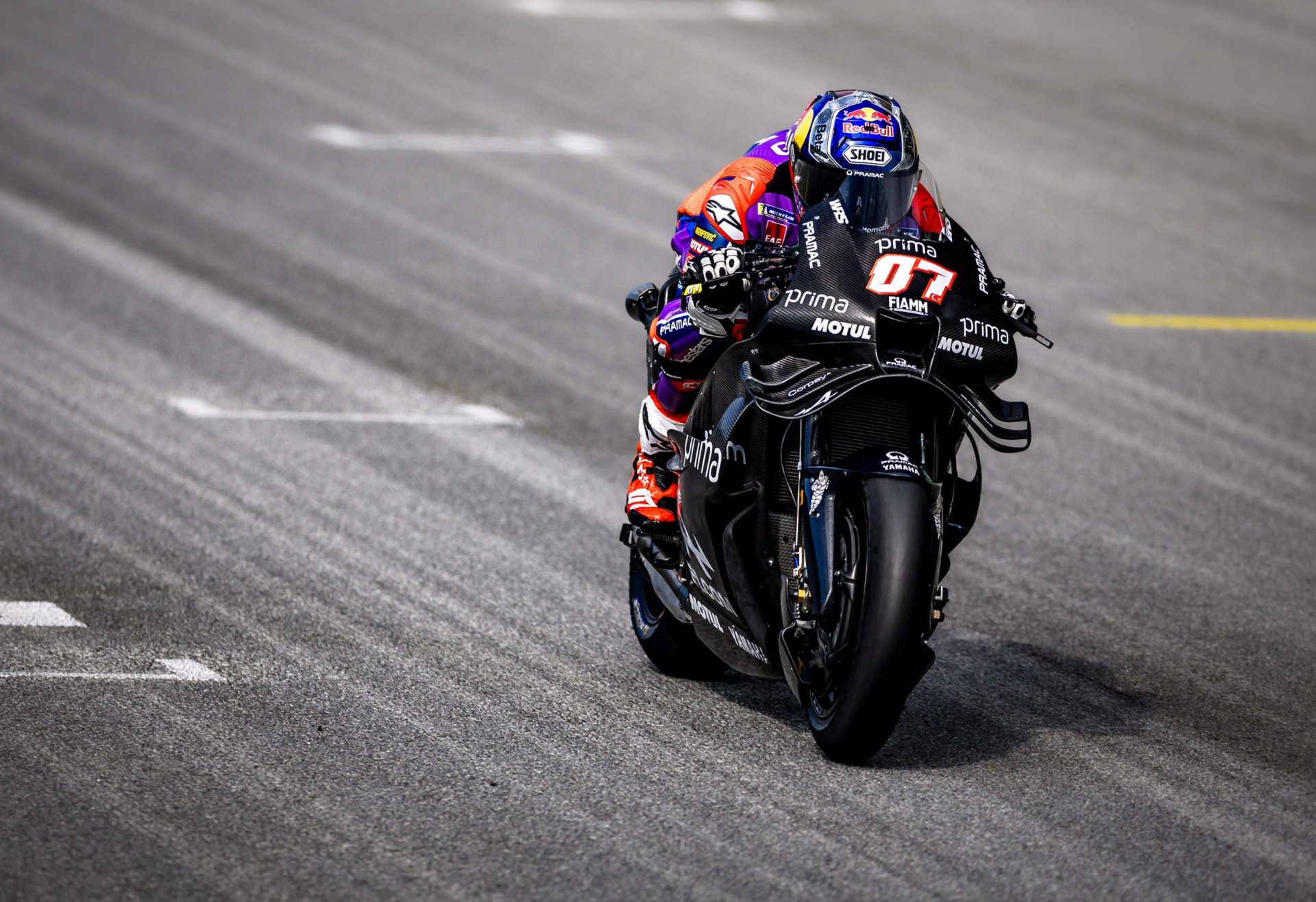
Then came Toprak Razgatlioglu, and the old debate roared back to life. The three-time WSBK champion signed with Prima Pramac Yamaha for 2026. Yamaha beat off interest from Honda to land him, and he was promised the same equipment as the factory riders, Fabio Quartararo and Alex Rins.
The timing wasn't kind. Yamaha's new V4 M1 has had a miserable year, with the project described as being in deep crisis. Toprak scored his first MotoGP point in his third Grand Prix, and his best result of the season is 11th at Balaton Park. Then came a heavy highside in Indonesia, a dislocated shoulder, and surgery scheduled in Milan for 26 October. He'll miss the final five rounds, with Yamaha test rider Augusto Fernandez filling in.
It's a tough rookie year, but it's not a verdict, and there have been real flashes. At the Grand Prix of the Americas in Austin, Toprak passed Fabio Quartararo, Yamaha's top factory rider, three laps from the finish when the Frenchman's tyres dropped away. That earned him 15th, his first MotoGP point, and the title of best Yamaha on the day. The same bike has been struggling for everyone, and there's the rubber too: all of his Superbike success came on Pirelli, while MotoGP currently runs Michelin. From 2027 that flips. MotoGP moves to Pirelli and 850cc bikes, which puts him back on familiar tyres and, as it happens, resets the whole grid. If he's fit for the Valencia test on 1 December, or Sepang in January, he'll get his first go on the new 850cc M1.
Nicolo Bulega is the other half of the story, and in some ways the more interesting one. His MotoGP route was a strange one: he arrived as a CEV Moto3 champion, struggled in Moto2, and had to rebuild in World Supersport, where he took the 2023 title with 16 wins. He then moved up to the factory Ducati WSBK team, won on debut, and has since gone on one of the most dominant runs the series has ever seen. 25 race wins in a row going back to the end of 2025, and he entered the 2026 summer break with a 133-point lead on his way to the title.
This time the timing and package have worked out better. Bulega has spent 2026 as a Ducati MotoGP test rider, helping develop the 850cc prototype on Pirelli tyres, and he stood in for the injured Marc Marquez at the end of 2025. Next year he lines up with Valentino Rossi's VR46 squad, alongside Fermin Aldeguer on a satellite Ducati, while Franco Morbidelli swaps seats the other way into Ducati's WSBK team. He even had a concrete KTM option on the table. Compare that with Hodgson's uncompetitive Ducati and you can see why people think it's different now.
So, what's the verdict?
Of 19 World Superbike champions, only two never got a chance to race in a MotoGP Grand Prix. Yet just Troy Bayliss and Ben Spies have won one, and no WSBK champion has won the MotoGP world title. The best championship finish from the lot is fourth.
The stats flatter the premier class a bit. Edwards had a long and podium-filled career. Bayliss gave us one of the best single days in modern MotoGP. Crutchlow won three races without a WSBK title. The real lesson is that champions who made the move in the right year, on the right bike, did well, and those who landed on something uncompetitive or got hurt did not.
That's why 2027 is so interesting. With a fresh 850cc rulebook, a new tyre supplier that WSBK riders already know, and Bulega going into a Ducati garage, the conditions for a first real success story are the best they've been in years. Toprak will get a fairer test once he's healthy and the new M1 turns up. Whether either of them can finally join Bayliss and Spies in the record books is the question to watch.