 Buying Advice
Buying your first motorcycle in Ireland: lessons from my own mistakes
BótharMoto Editorial · 20 October 2026 · 8 min read
Buying your first motorcycle, then getting licensed and insured for Irish roads, can feel daunting, and it's hard to know where to look for advice. Biker forums are a great starting point, but there's a huge amount of information out there and not all of it is current, relevant or suitable for beginners. Sifting through the noise can feel overwhelming when you're just starting out. Working out which machine suits you is all part of the ownership journey, and as you progress, your wants and needs will evolve too.
In 2018, I was lucky enough to be working in a motorcycle shop when I decided to make the jump from motocross to road bikes. Being surrounded by seasoned bikers was a great source of knowledge. I'd like to say I listened to and understood all of it, but inevitably my own beliefs and biases got in the way, and I made plenty of mistakes. By the end of this article, I hope you'll be better placed to avoid them.
What Is the Bike For?
The first thing to consider is the purpose of the bike. It sounds obvious, but it's often overlooked. Will it be your daily commuter and your only mode of transport? Is it for work, like delivery riding? Do you just want a relaxed long-distance cruise when it's dry out? Or are you a full-blown, leather-clad weekend warrior who wants to test the limits of the machine and maybe do the odd track day? Might you even take it off-road?
Knowing which category you fall into helps narrow down your choices, though you can of course be a mix of several. I'd class myself as a commuter slash weekend warrior, which was tricky. I needed a bike that was reliable, had storage, ate up long distances, could handle some decent lean angles and was a pleasure to open up on Sally Gap. Finding one that ticked the boxes for speed, handling, comfort, reliability and room for a top box was a challenge.
My Near Misses
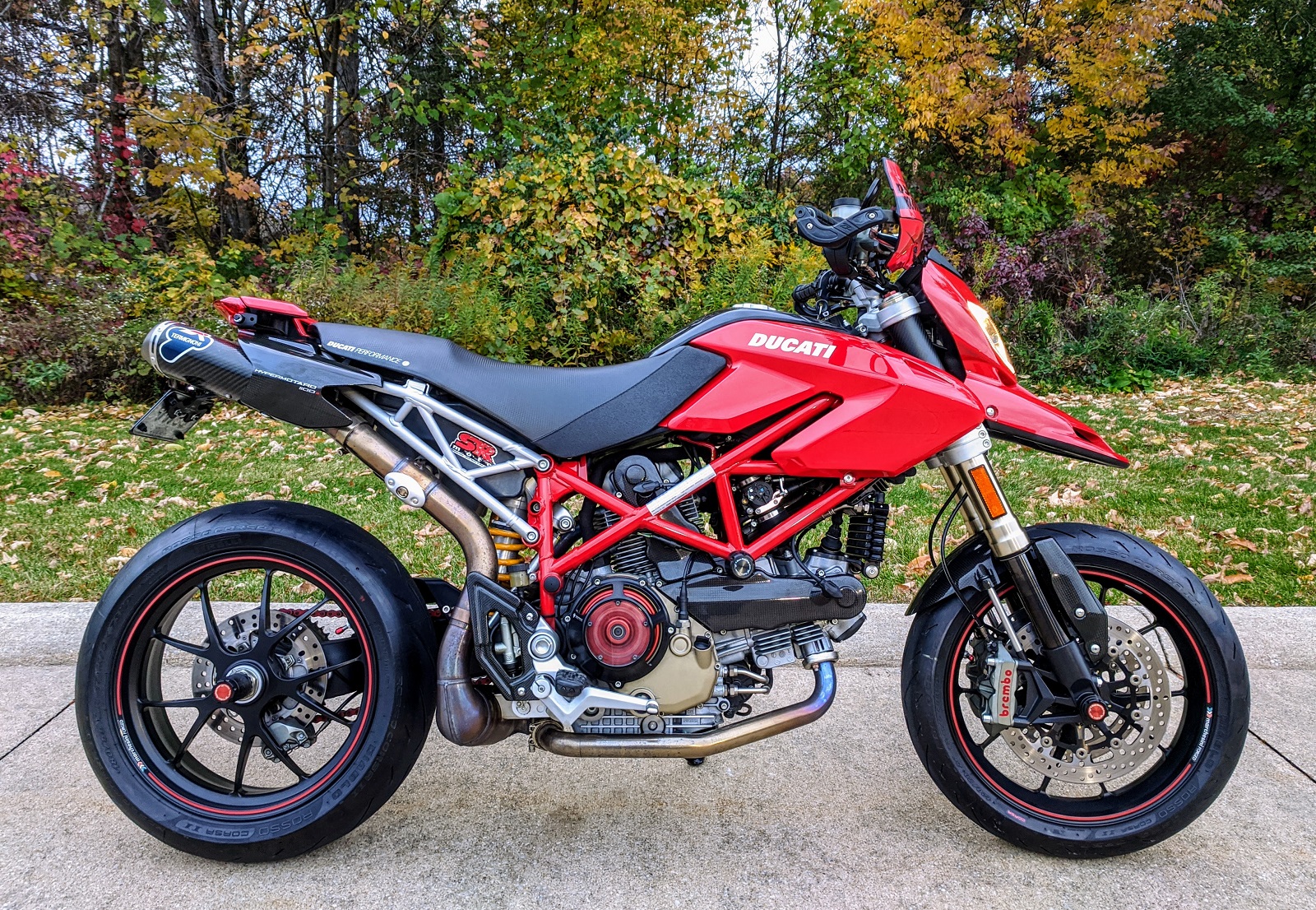
I kept getting hung up on speed, hunting for the most powerful bike I could get for my €4,000 budget and overlooking everything else. With my blinkers on, I locked in on an 1100cc Ducati Hypermotard. Its 70kW engine could be restricted to 35kW, the maximum allowed on an A2 licence, and I truly believed there was no replacement for displacement. You couldn't tell me otherwise.
We've all dreamed of owning a Ducati, and the idea of getting one as my first bike was all-consuming. It blinded me to everything the bike was missing. The torquey V-twin was ideal for the twisties but wouldn't be much fun on the motorway, and the small 12.4-litre tank wasn't built for long distances. Ducatis also aren't known for their reliability, and when something goes wrong, expensive parts and specialist labour will set you back a fortune. Even with all those red flags, I was still drawn to it. Luckily, the lads at the shop talked some sense into me.
So I turned my attention to something a little less exotic: a KTM 990 supermoto with a top box bracket, a larger fuel tank and a host of aftermarket parts. It was easier to fix than the Ducati and the parts were cheaper, but again I chose to ignore its downsides. It had short recommended service intervals and was designed for short blasts, not long-distance riding.
I also buried another concern: how attractive it was to thieves in Dublin. The sad reality is that certain models are favoured by scrotes. The Yamaha MT-07 and the KTM 990 SMC R or 690 SMC R are right up there. As this was going to be a commuter bike left unattended in the city centre, that only increased the chances of it finding a new home. Once again, I ignored common sense and nearly went through with the deal.
The Background Check That Saved Me
My boss couldn't talk me out of it, but he did me a favour and ran an online background check on the bike. What we found was worrying. I'd been told it had two previous owners and had never been dropped, but that couldn't have been further from the truth. The report showed 11 previous owners and a Category C classification, meaning the bike had been repaired but was written off as uneconomical because the damage was so severe.
That was another valuable lesson: don't take the seller's word at face value. Do your own research. Sites like motorcheck.ie let you see how many previous owners a bike has had, its recorded mileage, whether it's been in a major accident and whether it was ever stolen. The report costs around €35, which is well worth it for the peace of mind.
Eleven Things to Check Before You Buy
Along with the report, give the bike a thorough visual inspection. Here's what to look for:
Pitted forks and leaking fork seals. Run your finger along the shiny fork stanchion. Tiny corroded holes (known as pitting) or traces of oil on the upper stanchion suggest worn fork seals.
Worn or warped brake discs. A noticeable groove in the disc suggests the pads were left too long and have worn it down.
The date on the tyres. Tyres more than five years old start to oxidise and harden, and they lose grip. To find the date, look on the sidewall for a code starting with "DOT". It's often only stamped on one side, so you may need to check the inner-facing sidewall or roll the bike to see it. Ignore the plant codes and size figures and look at the last four digits. The first two are the week of the year (01 to 52) and the last two are the year of manufacture, so 2323 means the 23rd week of 2023. While you're at it, check the tread depth too.
Cold start. Listen for ticking, knocking or rattling from the engine. Once it warms up, watch for any engine management lights and check the exhaust for blue, white or black smoke.
Chain and sprockets. Look out for stiff or "frozen" links in the chain, and for worn or oddly shaped sprockets. Teeth that look pointed or hooked (known as "shark-toothed") are a bad sign.
Wheel bearings. If the bike has a centre stand, ask to put it up on it and check for play in the wheels, which suggests worn bearings.
Switches. Run through everything: full beams, indicators, horn and any other controls, and make sure they all work.
Oil. If you can access the dipstick, pull it out and check the colour and consistency. Avoid bikes with milky, clumpy or grainy oil, and look for fresh leaks under the engine or around the gaskets.
Throttle and cables. Turn the handlebars to full lock, left and right, to make sure the throttle and clutch cables don't bind, and check that the throttle snaps back crisply.
Footpegs. If the seller has advertised the bike as low mileage, check the rubber on the footpegs. If they're worn down, the mileage may have been tampered with.
Riding position. Sit on the bike and get a feel for it. If you plan on spending long stretches in the saddle, the seat and footpeg positions need to be comfortable. Your knees should bend at a comfortable angle so you can lightly grip the tank, and you should be able to reach the ground with at least the balls of both feet.
Don't Rush the Deal
Once you've done all these checks, don't be too eager to part with your money. If you still have doubts, it's often better to sleep on it, and don't let the seller pressure you. The used bike market has its share of cowboys who'll try to create a sense of urgency to close the deal. Don't fall for it.
If you spot issues during your checks, raise them with the seller and ask for more time to decide. In that time, find out what the repairs would cost in parts and labour, and only commit if you're fairly sure the bike is worth the investment.
Try not to get too excited about any one motorcycle, and keep your options open. Read up on the common issues with the bikes you're considering and keep coming back to your fundamental needs. Don't make an impulsive decision. Set yourself a handful of non-negotiables and work around them.
Hopefully, with these tips in mind, your first motorcycle purchase will go a little more smoothly than mine did.